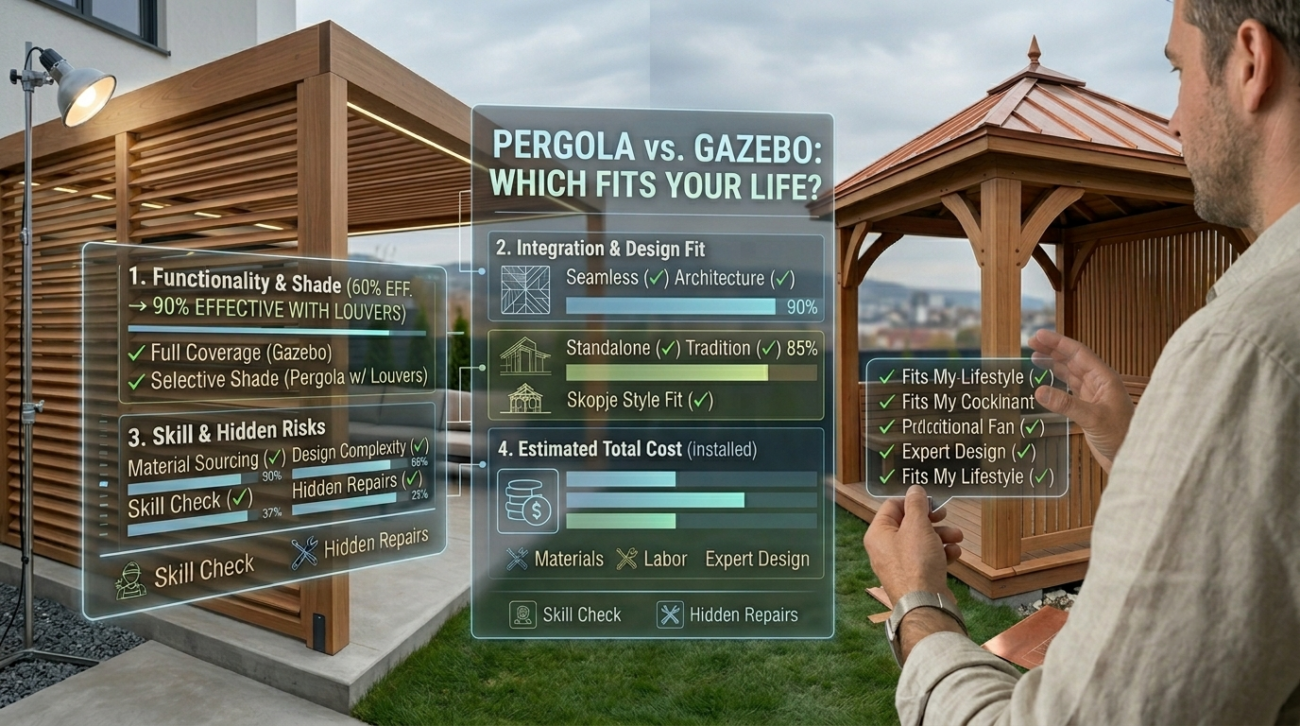
Every backyard upgrade conversation eventually arrives at the same fork in the road: pergola, or gazebo?
They get lumped together constantly; both are freestanding (or semi-attached) outdoor structures, both create a “destination” feel in your yard, and both show up in the same Pinterest boards. But the decision between them isn’t really about style. It’s about a single structural difference that changes everything else: the roof.
Get this decision right, and you’ll use the structure for fifteen years. Get it wrong, and you’ll have an expensive yard feature you avoid every time it rains, or one that blocks the sun you actually wanted.
The Core Difference
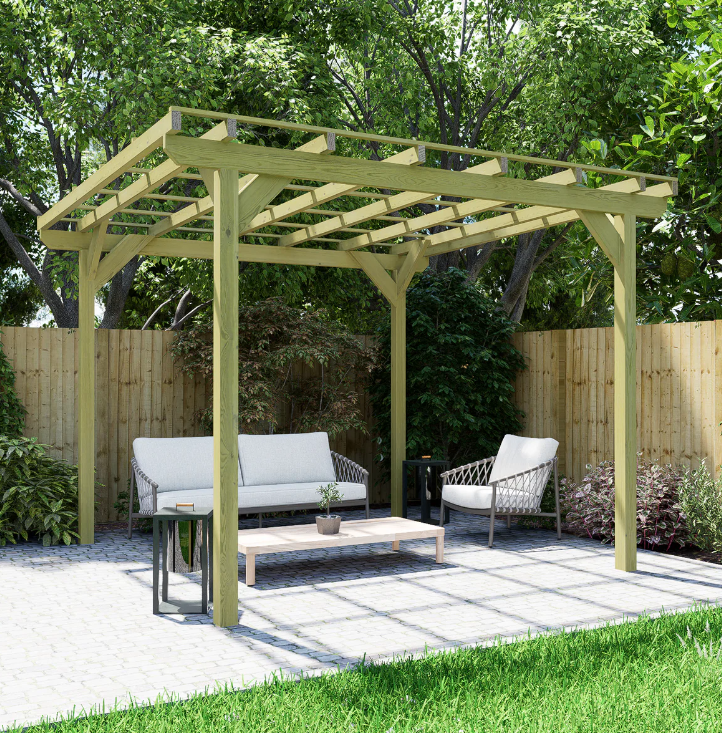
A pergola has an open or slatted roof horizontal beams (and sometimes additional cross-slats) that filter sunlight and create dappled shade without fully blocking it. Pergolas are often attached directly to the house, extending a patio into a semi-covered outdoor room.
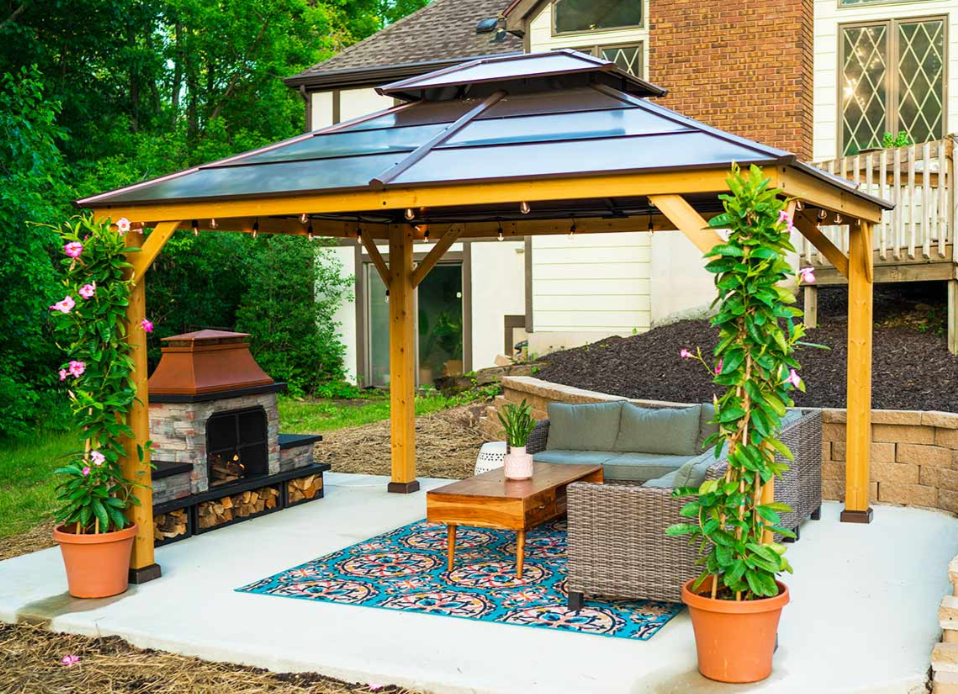
A gazebo has a solid, typically peaked roof that provides complete protection from sun and rain. Gazebos are almost always freestanding, frequently round, hexagonal, or octagonal, and read as a more traditional, classic structure.
That’s it. That single difference open roof versus solid roof is what drives every other decision: cost, weather protection, maintenance, and how the structure actually gets used.
Cost Comparison
| Structure Type | Typical Cost Range |
|---|---|
| Standard wood pergola | $2,200 – $6,000+ |
| Vinyl pergola | $3,000 – $5,500 |
| Aluminum/steel pergola | $2,000 – $5,000 |
| Motorized louvered pergola | $5,000 – $15,000+ |
| Standard gazebo (wood or vinyl) | $2,700 – $10,000+ |
| Hardtop/premium gazebo | $5,000 – $15,000+ |
| Custom-built gazebo (contractor) | $8,000 – $20,000+ |
The short version: pergolas generally cost less than gazebos because they use fewer materials and require less intensive construction there’s no solid roof structure, roofing material, or the additional engineering that comes with it.
Weather Protection: The Deciding Factor for Most People
If you live somewhere with real rain or snow and you want to actually use the structure regardless of weather, a traditional open pergola will disappoint you. It offers partial shade and a nice aesthetic frame for the space, but if a downpour starts, everyone’s running for the house.
A gazebo, by contrast, gives you a dry, sheltered spot rain or shine. This is the single biggest reason people choose gazebos in regions with unpredictable weather the structure becomes usable on days a pergola simply wouldn’t be.
However, this is the genuinely important update for 2026 that calculus has shifted.
Check out our article on: Vertical Garden Ideas for Small Spaces: Grow Up, Not Out
Louvered Pergolas Changed the Equation
A louvered pergola uses adjustable roof panels slats that rotate via a motor (or in some cases, manually) to either open fully for sun and airflow, or close completely for full rain protection. In effect, it gives you a pergola’s open, modern aesthetic on a clear day and a gazebo’s full weather protection when you need it.
This has genuinely eaten into the gazebo’s core advantage. For homeowners who want flexibility without sacrificing style, a louvered pergola is often the best of both categories at a price point that, depending on size and automation level, can land anywhere from comparable to a premium gazebo to significantly more.
Style and Aesthetic Fit
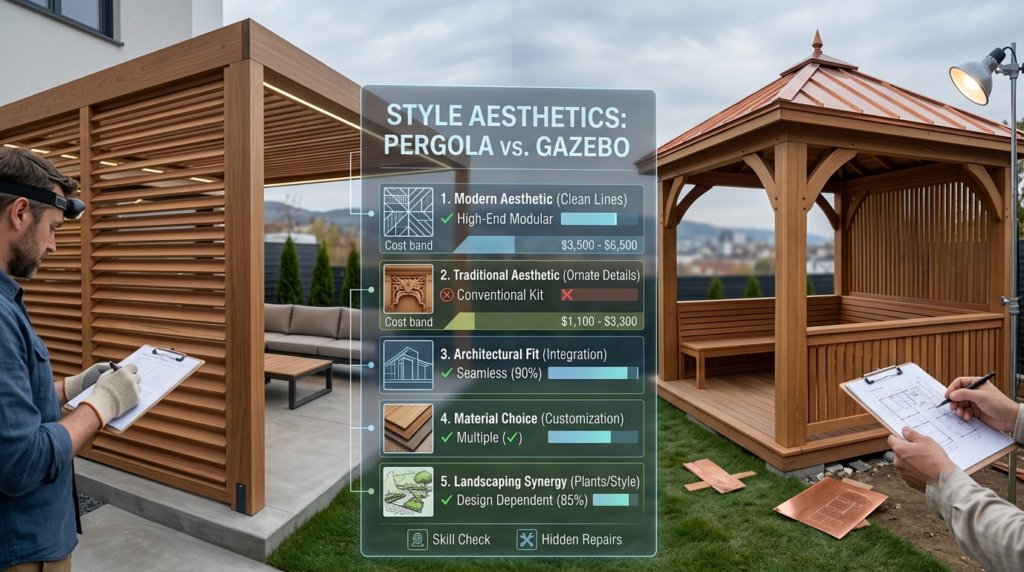
Pergolas read as modern, architectural, and open. The clean horizontal lines integrate naturally with contemporary homes, and because many designs attach directly to the house, they create a seamless indoor-outdoor flow that feels like an extension of your living space rather than a separate destination.
Gazebos read as classic, ornamental, and freestanding. Their typically symmetrical, multi-sided shape makes them a strong visual focal point the kind of structure that anchors a garden view from your kitchen window, even when nobody’s using it. If your home leans traditional, farmhouse, or cottage in style, a gazebo tends to feel more cohesive than a pergola’s flat, modern lines.
Privacy and Enclosure
This is an area where gazebos clearly win. Because they have solid roofs and (often) partial or full walls, gazebos can be outfitted with insect screens, curtains, or glass panels to create a genuinely private, bug-free outdoor room useful for hot tub enclosures, dining areas plagued by mosquitoes, or simply wanting a sense of separation from the rest of the yard.
Pergolas, even when fitted with curtains or privacy screens along the sides, remain fundamentally open overhead. You can dress them up with retractable shade canopies or climbing vines trained across the beams, but you won’t achieve the same fully enclosed feeling a gazebo offers.
Maintenance Comparison
| Factor | Pergola | Gazebo |
|---|---|---|
| Roof maintenance | Minimal (no roofing material to maintain) | Moderate (roof material shingles, polycarbonate, or metal needs periodic inspection) |
| Wood treatment (if wood) | Required every 1–2 years | Required every 1–2 years |
| Snow load concerns | Generally low risk (open structure) | Higher-risk solid roofs can accumulate snow weight |
| Cleaning | Simple wipe down beams | More involved gutters, roof surface, potential moss/algae in shaded climates |
| Structural complexity | Lower | Higher (more components, more potential failure points over time) |
In snow-heavy climates, gazebo roofs need to be checked for load capacity and may require snow removal after heavy storms something an open pergola structure largely avoids since there’s no solid surface for snow to accumulate on.
Which One Pairs Better With an Outdoor Kitchen?
If an outdoor kitchen is part of your plan, this matters more than people expect.
Pergolas work well paired with outdoor kitchens because the open structure allows smoke and cooking odors to dissipate naturally rather than getting trapped under a solid roof. The trade-off is that your outdoor kitchen appliances and any built-in seating remain exposed to rain when storms roll through, unless you add a louvered or retractable cover.
Gazebos with solid roofs better protect built-in grills, refrigerators, and cabinetry from weather damage important if you’ve invested significantly in outdoor kitchen equipment. The downside is ventilation: a fully enclosed gazebo with a grill running inside needs genuinely adequate airflow, or you’re looking at smoke buildup and potential carbon monoxide concerns with certain appliances.
The practical compromise many homeowners land on: a pergola directly over the cooking and prep area (for ventilation) connected to, or extending toward, a gazebo or covered dining area nearby for full weather protection during meals.
So Which Should You Choose?
Choose a pergola if:
- You live somewhere with mostly dry, sunny weather and want partial shade rather than full coverage
- You want a modern aesthetic that extends your home’s architecture into the yard
- Budget is a significant factor and you want the lower-cost option
- You’re planning an attached structure off an existing patio or deck
- An outdoor kitchen with good ventilation is part of the plan
A gazebo if:
- You want full protection from rain, sun, and snow regardless of weather
- You’re after a traditional, classic garden aesthetic as a standalone focal point
- Privacy and enclosure (screens, curtains, glass panels) matter to you
- You’re building a dedicated hot tub enclosure or fully sheltered dining space
- You don’t mind the higher cost and increased maintenance of a solid roof structure
Choose a louvered pergola if:
- You want the modern look of a pergola but refuse to compromise on weather protection
- Budget allows for the higher upfront cost of motorized, adjustable roofing
- You want one structure that adapts to both sunny afternoons and sudden downpours
Permits and Installation Considerations
Both structures may require a building permit depending on your municipality, size, and whether the structure is attached to your home. As a general rule:
- Freestanding structures under a certain height and square footage (commonly under 120 sq ft, though this varies significantly by city) are often exempt from permitting requirements.
- Attached pergolas are more likely to require a permit since they tie into your home’s existing structure.
- Electrical work for lighting, motorized louvers, or outdoor kitchen appliances typically requires its own permit and licensed electrician, regardless of which structure you choose.
Always check with your local building department before construction begins retroactive permitting after a failed inspection is far more expensive and stressful than confirming requirements up front.
The Bottom Line
There’s no universally “better” choice between a pergola and a gazebo only a better choice for your climate, your style, your budget, and how you actually plan to use the space. If you’re chasing flexibility above all else, the modern louvered pergola has genuinely closed the gap that used to make gazebos the obvious pick for weather protection. But if a true, classic, fully sheltered garden room is the goal, the gazebo still does that job better than anything else in this category.
ALSO READ: The Cheapest Ways to Insulate an Older Home (That Actually Make a Difference)
