
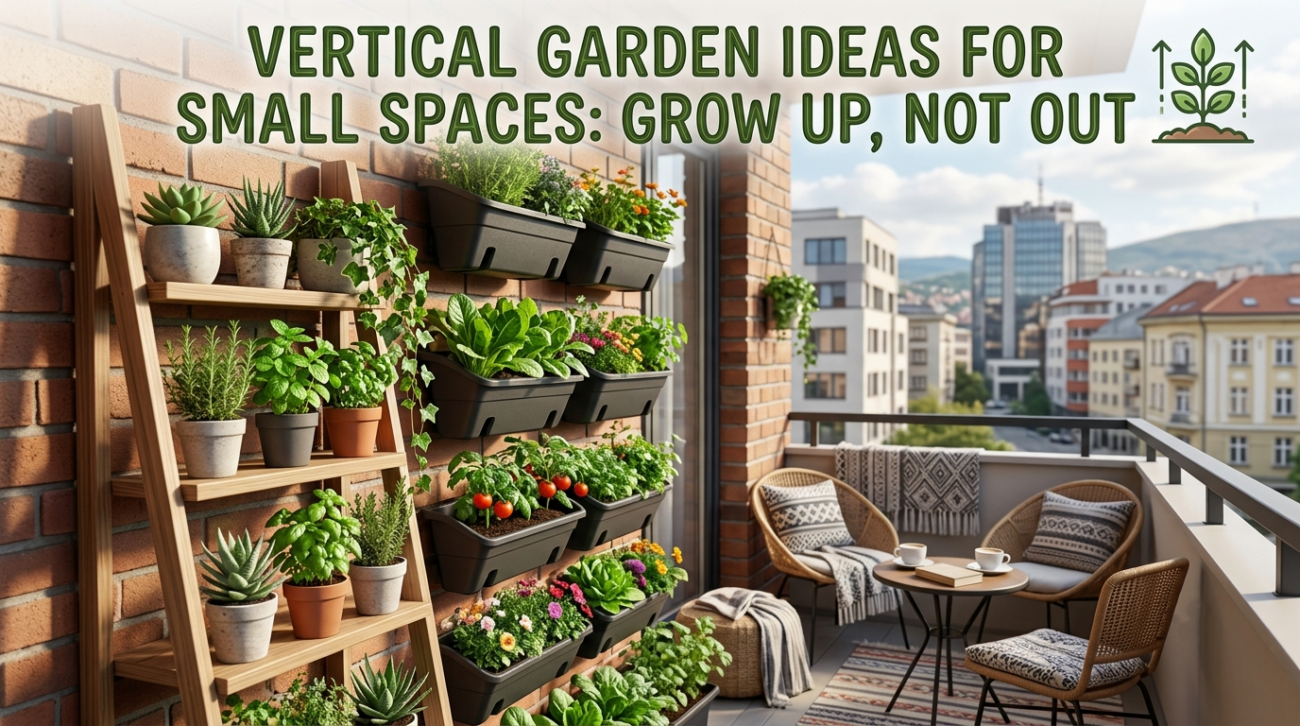
My neighbor Karen has no yard. She has a 6-foot-wide balcony on the third floor of a city apartment, a north-facing kitchen window, and somehow more fresh herbs than most people grow in an entire backyard.
Her secret isn’t a green thumb. It’s a shift in thinking. She stopped looking at the floor and started looking at the walls.
Vertical gardening the practice of growing plants upward along walls, trellises, fences, and vertical structures isn’t just a trend for people who lack space. It’s a smarter way to garden full stop. You get more plants in less area, easier harvesting at eye level, better air circulation, and a living, breathing element of decor that no IKEA shelf can replicate.
Whether you have a 400-square-foot apartment or a small patio behind a townhouse, here are the vertical garden ideas that actually work along with what to plant, what to avoid, and what it’ll cost you.
Why Vertical Gardening Works Especially Well in Small Spaces
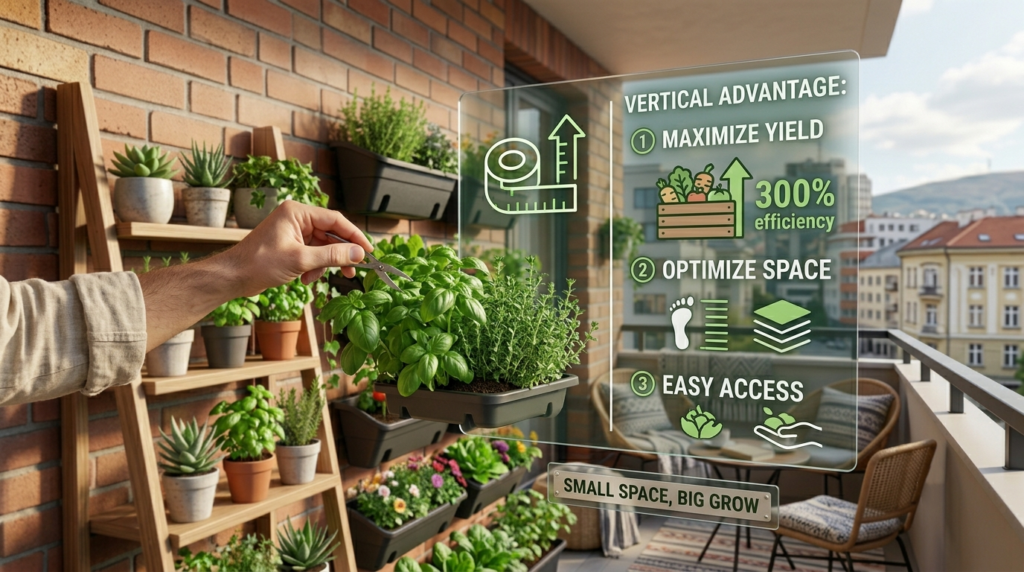
Before we get into specific setups, it’s worth understanding why going vertical beats the conventional approach when square footage is limited.
- You grow 3–4x more plants in the same footprint. A 4-foot-wide by 6-foot-tall wall panel gives you roughly 24 square feet of planting area that’s equivalent to a decent-sized raised bed, but it uses zero floor space.
- It creates visual height, which makes small balconies and rooms feel larger, not more crowded.
- Maintenance is easier. Plants at eye level mean no crouching, no kneeling, no back pain.
- Air circulation improves, which reduces fungal disease one of the most common problems in dense, small-space gardens.
9 Vertical Garden Ideas Ranked From Easiest to Most Ambitious
1. The Pallet Garden (Free to $40)
If you’ve scrolled Pinterest in the last five years, you’ve seen these. A wooden shipping pallet stood on end, stuffed with landscape fabric, filled with soil, and planted with herbs or succulents.
They work. They’re cheap. The learning curve is zero.
What to plant: Herbs (basil, thyme, chives, oregano), strawberries, lettuce, succulents, pansies.
Important note: Source food-safe pallets only. Look for the HT stamp (heat treated) on the pallet wood avoid MB-stamped pallets, which have been treated with methyl bromide, a fumigant you don’t want near food.
Best for: Sunny patios, fence lines, side yards.
2. Wall-Mounted Modular Planters ($60 – $200)
These are exactly what they sound like: individual planting pockets or containers that mount directly to a wall or fence. Systems like Wooly Pocket, Lechuza, or LECA wall panels let you arrange and rearrange the layout as you see fit.
The big advantage over DIY solutions is drainage. Good modular systems handle water runoff properly, which keeps your wall from staining and your plants from drowning.
What to plant: Ferns, pothos, philodendrons, herbs, succulents (in well-draining media).
Best for: Indoor accent walls, covered patios, apartment balconies where drilling is allowed.
3. The Trellis + Climbing Plants Setup ($20 – $80)
This is the oldest vertical gardening technique and still one of the most productive. A simple wooden or metal trellis against a fence or wall, paired with climbing vegetables or vining ornamentals, gives you serious growing capacity with minimal investment.
Best climbing vegetables: Pole beans, cucumbers, peas, indeterminate tomatoes (with cage support), small melons.
Best ornamental climbers: Clematis, climbing roses, morning glory, black-eyed Susan vine, passionflower.
The trick: Get the trellis at least 5–6 feet tall if you’re growing vegetables. Anything shorter and you’ll hit the top of the structure mid-season and lose yield.
4. Hanging Planters in Tiers ($30 – $100)
Hanging planters aren’t just for porches. A series of ceiling-mounted hooks at different heights in a bright kitchen or sunroom creates a tiered planting system that uses completely unused vertical airspace the zone between your counters and ceiling that contributes nothing decoratively but could be growing herbs you cook with every day.
Plants that do well hanging: Trailing herbs like thyme and oregano, pothos, string of pearls, spider plants, ivy, nasturtiums.
What to avoid: Heavy, deep-rooted plants. The planter needs to be lightweight enough for the hook to support safely.
5. Repurposed Shoe Organizer Pocket Garden ($10 – $25)
This sounds ridiculous until you see it done well. A fabric over-the-door shoe organizer, hung from a fence, railing, or wall bracket, becomes a multi-pocket vertical planter for almost nothing.
Fill each pocket with a mix of potting soil and perlite (not garden soil, which compacts and drains poorly in containers), and plant one herb per pocket. A standard 24-pocket organizer planted with herbs essentially gives you a productive kitchen herb garden on a single square foot of wall space.
Best for: Renters who can’t drill, small balconies, first-time gardeners on a tight budget.
6. Stacked Terracotta or Strawberry Tower ($40 – $90)
A strawberry planting tower a tall terracotta planter with side pockets is one of the most space-efficient ways to grow fruiting plants vertically. The same design works beautifully for herbs, lettuce, or annual flowers.
You can buy commercial versions, or stack progressively smaller pots on a central pole for a DIY equivalent.
What to plant: Strawberries (obviously), trailing herbs, lettuce varieties, violas, pansies.
7. PVC Pipe Vertical Hydroponic Tower ($80 – $200 DIY)
This is where vertical gardening gets genuinely high-tech and surprisingly doable for a motivated DIYer.
A vertical hydroponic tower uses a central PVC pipe or channel with small planting cups inserted at intervals. A small water pump circulates nutrient solution from a reservoir at the base up through the system, where it drips down past the root zones and returns to the reservoir.
The result: Year-round growing, even indoors under grow lights, with no soil required and dramatically faster growth rates than soil-based systems.
What you’ll need: 4-inch PVC pipe, a small aquarium or fountain pump, food-safe reservoir (a 5-gallon bucket works), net cups, hydroponic nutrients, pH testing kit.
What to grow: Lettuce, spinach, basil, kale, strawberries anything that doesn’t develop deep tap roots.
8. Living Moss or Fern Wall Panel ($100 – $400)
For a purely decorative statement indoors, a preserved moss panel or installed fern wall creates a living artwork that requires almost zero maintenance. Preserved moss panels use real moss that has been stabilized they don’t need water or light and last for years.
If you want something alive, a panel of pothos, ferns, or air plants mounted on a moisture-protected backing creates a lush focal wall that doubles as a natural air purifier.
Best placement: Accent wall in living room, entryway, home office, bedroom anywhere with indirect light.
9. Full Custom Living Wall System ($300 – $1,500+)
For those who want to go all-in, commercial living wall systems like those from Tournesol Siteworks, Florafelt, or custom-built irrigated panels create truly dramatic effects. These systems include integrated drip irrigation, proper waterproofing behind the panel, and can cover entire walls with hundreds of plants.
This is a significant investment, but in the right space, a living wall does more for the character of a room than any piece of furniture or artwork at a similar price.
What Plants Actually Survive on Indoor Vertical Walls
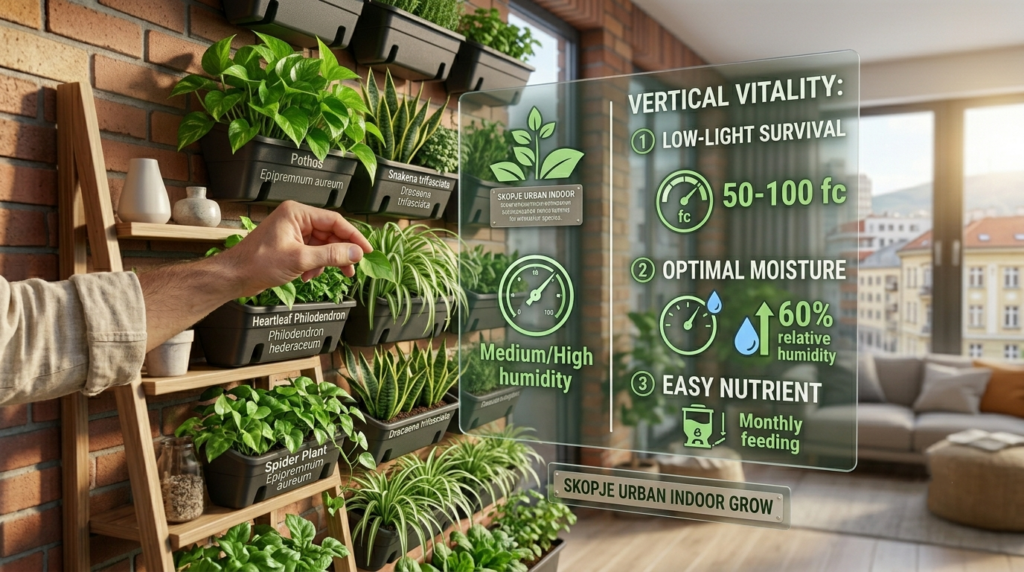
Not every plant is suited to vertical life, especially indoors. The best performers share two traits: they’re lightweight (won’t strain the mounting system over time) and they have shallow, spreading root systems that thrive in the limited soil depth of wall planters.
| Plant Type | Light Needed | Beginner-Friendly? | Notes |
|---|---|---|---|
| Pothos | Low to medium | ✅ Yes | Nearly indestructible, trails beautifully |
| Ferns (Boston, Maidenhair) | Medium indirect | ⚠️ Moderate | Loves humidity; great for bathrooms |
| Air plants (Tillandsia) | Bright indirect | ✅ Yes | No soil needed; mist 2-3x weekly |
| Spider plant | Low to bright | ✅ Yes | Produces offsets that fill out the wall |
| Herbs (basil, thyme, oregano) | 6+ hours direct | ⚠️ Moderate | Needs a sunny south window or grow light |
| Succulents | Bright direct | ✅ Yes | Works outdoors; struggles indoors without a grow light |
| Lettuce | Moderate | ✅ Yes | Fast-growing; great for hydroponic towers |
| Philodendron | Low to medium | ✅ Yes | Tolerates neglect; grows aggressively |
Common Vertical Gardening Mistakes (And How to Avoid Them)
Overwatering. The number one killer in vertical gardens. Planters on walls dry out faster than ground-level containers and have drainage constraints. Always check soil moisture before watering rather than following a fixed schedule.
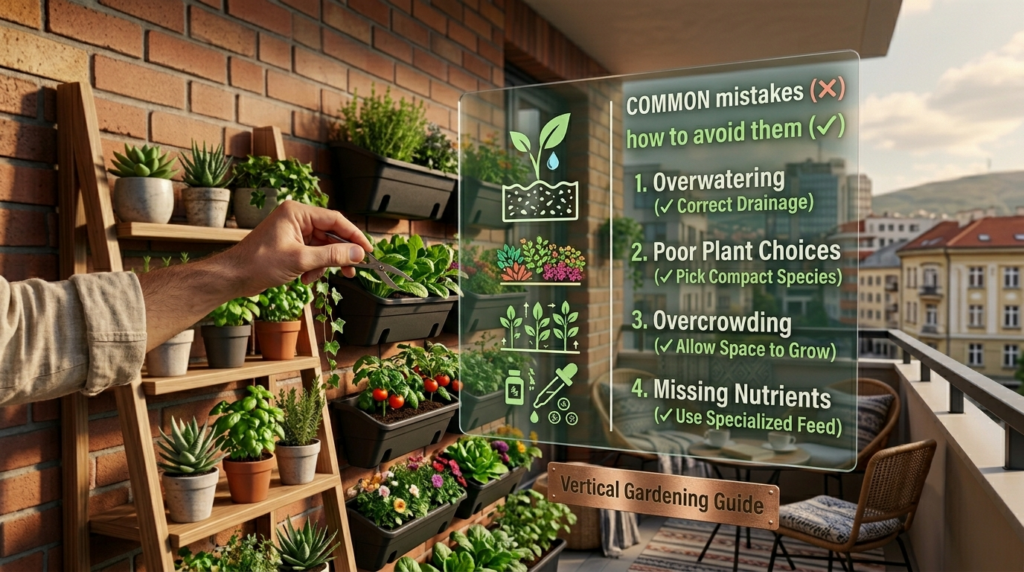
Wrong soil mix. Standard garden soil is too heavy and compacts into a brick in vertical containers. Use a lightweight potting mix with added perlite (a 70/30 ratio) for better drainage and root aeration.
Ignoring weight. A fully watered wall planter is heavy. Make sure your wall anchors are rated for the weight, and use appropriate hardware for your wall type (drywall anchors for interior walls, masonry anchors for brick or concrete).
Planting too densely. It’s tempting to pack a wall planter to look lush immediately. Plants need room to grow. Give them space at planting time and let them fill in over weeks, not days.
Getting Started: What You Actually Need
You don’t need a $500 system or a green thumb developed over decades. The entry point to vertical gardening is as low as $10 to $25: a hanging shoe organizer, a bag of potting mix, and a few herb starts from the garden center.
Start small. Get one system working, understand its watering rhythm, see what thrives. Then scale up.
The best vertical garden is the one you actually maintain, which means starting with something simple enough that you won’t abandon it by August.
