
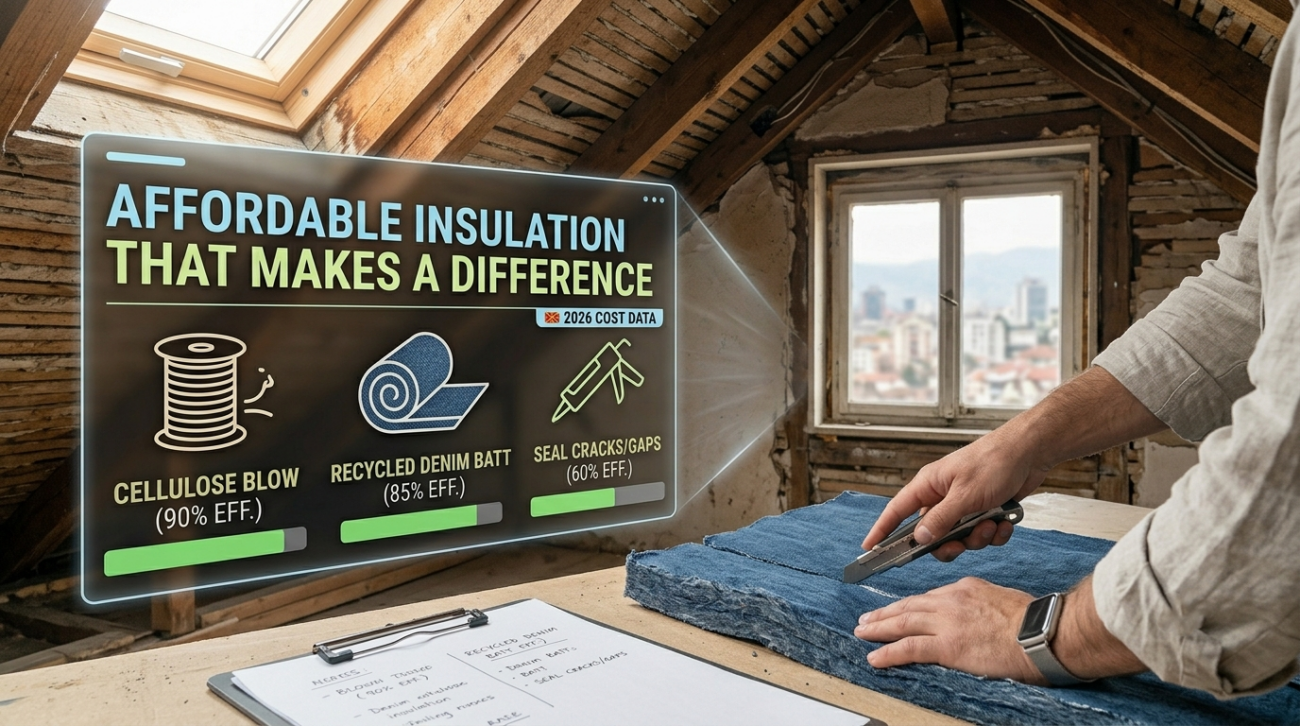
Older homes have character. They have crown molding, solid wood floors, doors that close with a satisfying thunk, and history baked into every corner.
They also have energy bills that make your eyes water.
Homes built before the 1980s, and especially those built before 1950, were constructed with almost no attention to thermal performance. The idea of “insulation” to today’s standard simply wasn’t part of the design equation. The result is a home that bleeds heat in winter, lets summer in all summer long, and costs significantly more to keep comfortable than a comparable newer home.
The good news: you don’t need to gut your walls or spend $20,000 to fix it. Many of the most effective insulation upgrades for older homes are surprisingly affordable; some cost almost nothing. The key is knowing which areas give you the most return for each dollar spent, and doing them in the right order.
Start Here: Where Older Homes Actually Lose Heat
Before spending anything, it helps to understand where the energy loss is actually happening. In a typical older home, the breakdown looks roughly like this:
| Area | Approximate Heat Loss % |
|---|---|
| Air leaks (gaps, cracks, penetrations) | 25–40% |
| Attic and roof | 20–30% |
| Walls | 15–25% |
| Windows and doors | 10–20% |
| Basement / crawl space | 5–15% |
| Floor | 5–10% |
This is why air sealing almost always comes before insulation in any serious energy upgrade. It doesn’t matter how much insulation you add to the attic if cold air is pouring in through the gap around your pipe penetrations, outlet boxes, and the space where your old chimney meets the framing.
The Priority List: What to Do First, Second, and Third
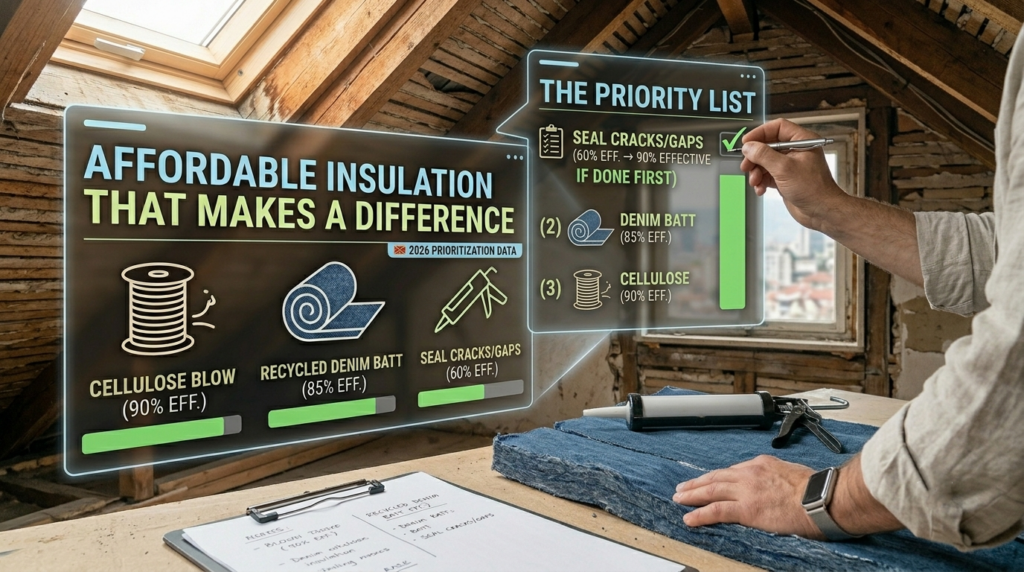
Priority 1: Air Sealing (Cost: $30 – $300 DIY)
This is the highest-return action available to most older homeowners, and it’s the most overlooked. Air sealing means identifying and closing every gap where conditioned air escapes or outdoor air enters.
Common air leak locations in older homes:
- Around window and door frames (exterior and interior trim)
- Electrical outlets and switch plates on exterior walls
- Where plumbing pipes pass through floors and ceilings
- The attic hatch or pull-down stair opening
- Around recessed light fixtures that penetrate the ceiling into the attic
- Where walls meet the top and bottom plates (rim joist area in basements)
- Fireplace dampers and chimney bypasses
What to use:
- Caulk for gaps under 1/4 inch around window frames, trim, and penetrations. A tube runs $4 to $8 and covers about 30 linear feet.
- Expanding spray foam (like Great Stuff) for larger gaps around pipes and ducts. A can costs $8 to $12.
- Weatherstripping for moving parts door frames, window sashes, attic hatches. Budget $15 to $40 per door.
- Foam outlet gaskets (behind outlet and switch plates on exterior walls): a pack of 12 runs about $4. Tiny investment, surprisingly impactful.
A focused weekend of caulking and air sealing can cut energy loss by 10% to 20% on its own in an older, leaky home.
Priority 2: Attic Insulation (Cost: $300 – $1,500 DIY; $1,000 – $4,000 Professional)
The attic is the single highest-impact insulation location in most homes. Heat rises. In winter, your expensive heated air escapes straight through an under-insulated attic ceiling. In summer, the attic absorbs solar heat and radiates it down into your living spaces.
What’s the right amount? The U.S. Department of Energy recommends R-38 to R-60 for most attics depending on your climate zone. Most older homes have R-11 or less or nothing at all.
The cheapest DIY attic option: blown-in cellulose or fiberglass. Most major home improvement stores (Home Depot, Lowe’s) rent blower equipment for free when you purchase a minimum number of bags. A bag of blown-in cellulose runs $15 to $25 and covers roughly 40 square feet at the recommended depth.
For a 1,200-square-foot attic, expect to spend $300 to $600 in materials and a weekend of labor. The savings over time are significant; attic insulation upgrades in older homes commonly reduce heating and cooling costs by 15% to 25%.
Important: Seal air leaks at the attic floor before adding blown-in insulation. It’s much harder to find and seal those gaps after the insulation is installed.
Priority 3: Weatherstripping Doors and Windows (Cost: $15 – $200)
Every exterior door in an older home likely has deteriorated weatherstripping that’s cracked, compressed, or missing entirely. You can often see light around the door frame when it’s closed which means you can definitely feel air coming through it.
Door weatherstripping types:
- V-strip (tension seal): A folded strip of metal or plastic that springs open to fill gaps along the sides of the door. Durable, inexpensive ($10–$20 per door).
- Door sweep: Seals the bottom gap between the door and threshold. Easy to install. The draft from under a 1/4-inch gap along the bottom of a door is substantial. Door sweeps run $15 to $35.
- Foam tape: Best for irregular gaps, particularly on older doors that aren’t perfectly square. Self-adhesive, under $10 per roll.
Windows are more complex. For older single-pane windows you’re not ready to replace, the most cost-effective upgrades are:
- Rope caulk for winter: A removable, pliable caulking material pressed into the window channel. Costs under $5 per window and can be peeled off in spring. Not pretty, but effective.
- Interior window insulation film kits: A plastic film stretched across the window frame and shrunk tight with a hair dryer. Eliminates drafts and reduces heat loss through the glass itself. Kits run $8 to $20 per window and are noticeably effective.
- Heavy thermal curtains: Quality thermal curtains with a blackout liner can reduce heat loss through a single-pane window by 25–35%. Not an insulation fix, but a meaningful improvement.
Priority 4: Basement and Crawl Space (Cost: $500 – $3,000)
Cold floors in winter are almost always a basement or crawl space insulation problem. Cold air settles, and if there’s an uninsulated crawl space beneath your floor, that cold migrates up into your living space.
The rim joist, the band of framing that sits on top of your foundation wall, is one of the most air-leaky areas in older homes and one of the easiest to address. You can access it from the basement and seal it with cut-and-cobble rigid foam board (cut pieces of foam to fit between the joists) plus spray foam around the perimeter. This is a genuine DIY project that costs $200 to $600 and makes a noticeable difference in basement warmth.
For a vented crawl space, installing kraft-faced fiberglass batts between the floor joists above the crawl space is an effective DIY option. Materials run $0.25 to $0.75 per square foot.
For unvented or encapsulated crawl spaces, the approach shifts to insulating the crawl space walls rather than the floor above. This is more involved and is often best left to a professional.
Priority 5: Wall Insulation (Cost: $1,500 – $8,000)
Walls are last on this list not because they’re unimportant, but because they’re the hardest to access without either opening up the walls from the inside or drilling from the outside. Both are invasive and expensive.
The most common modern approach for existing walls: blown-in insulation through small holes. A contractor drills small holes at regular intervals along the exterior siding (or from inside), blows dense-pack cellulose or fiberglass into the cavity, and plugs the holes. The siding is typically removed in sections and replaced, or patched from inside.
Dense-pack blown-in for exterior walls typically costs $1 to $4 per square foot for the installed area of wall. For a 1,500 sq ft home with significant exterior wall area, expect $3,000 to $8,000 installed.
Is it worth it? For homes that have already addressed the attic, basement, and air sealing, wall insulation is the next meaningful frontier. But don’t start here; the other priorities have better cost-to-benefit ratios.
Quick Wins: Cheap Fixes That Still Help
Not ready for a big project? These low-effort, low-cost measures can make a noticeable difference in comfort:
- Insulated pipe sleeves on hot water pipes in unheated spaces: prevents heat loss from your water heater’s distribution runs. $5 to $20 total.
- Water heater blanket: If your water heater is in an unheated garage or basement and feels warm to the touch on the exterior, an insulating blanket ($25–$35) can reduce standby heat loss.
- Foam backer rod for large gaps: For gaps larger than what caulk can bridge, foam backer rod ($5–$10 per roll) fills the void before caulking on top.
- Chimney balloon: An inflatable plug installed inside your chimney when the fireplace isn’t in use. Cold air pours down an open chimney flue. A chimney balloon costs $35 to $60 and dramatically reduces drafts in rooms with fireplaces.
The Government Money You Might Be Leaving on the Table
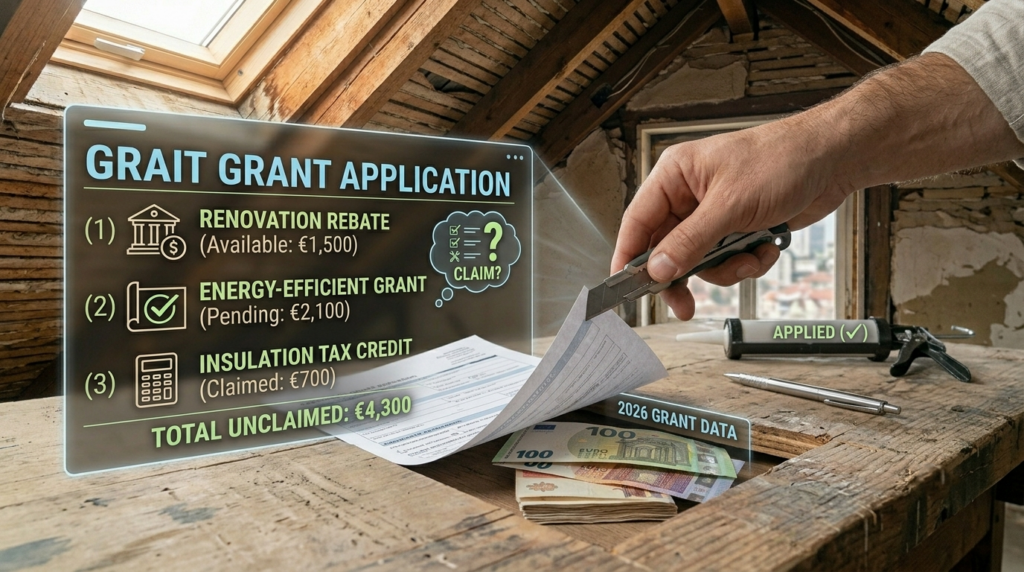
Before you spend anything, check whether you qualify for assistance:
Federal Tax Credit (Inflation Reduction Act): Homeowners can claim a federal tax credit of up to 30% of the cost of qualifying insulation improvements, capped at $1,200 per year. This includes insulation materials and certain air sealing products. Consult the current IRS guidance or a tax professional for eligibility details.
State and Utility Programs: Many states and utility companies offer rebates or low-interest financing for home energy upgrades. Programs like ENERGY STAR’s rebate finder, or your state’s energy office, can connect you with available incentives. Some utilities will even perform a free home energy audit that identifies exactly where your home is losing energy.
Weatherization Assistance Program (WAP): Income-eligible homeowners may qualify for free weatherization services through this federal program, delivered through local agencies. It’s worth checking eligibility before spending your own money.
Putting It Together: A Realistic Budget by Project Stage
| Stage | What It Covers | DIY Cost | Hired Cost |
|---|---|---|---|
| Stage 1 | Air sealing (caulk, foam, weatherstripping) | $50 – $200 | $300 – $800 |
| Stage 2 | Attic insulation (blown-in) | $300 – $700 | $1,000 – $3,000 |
| Stage 3 | Basement rim joist + crawl space | $200 – $600 | $600 – $2,000 |
| Stage 4 | Wall insulation (dense-pack blown-in) | Not DIY | $2,000 – $8,000 |
| Total (all stages) | $550 – $1,500 | $4,000 – $14,000 |
For most older homeowners on a budget, Stages 1 and 2 alone will deliver 60% to 70% of the potential energy savings at a fraction of the full project cost. Start there. See the difference in your utility bills. Then decide how far to take it.
ALSO READ: Vertical Garden Ideas for Small Spaces: Grow Up, Not Out
