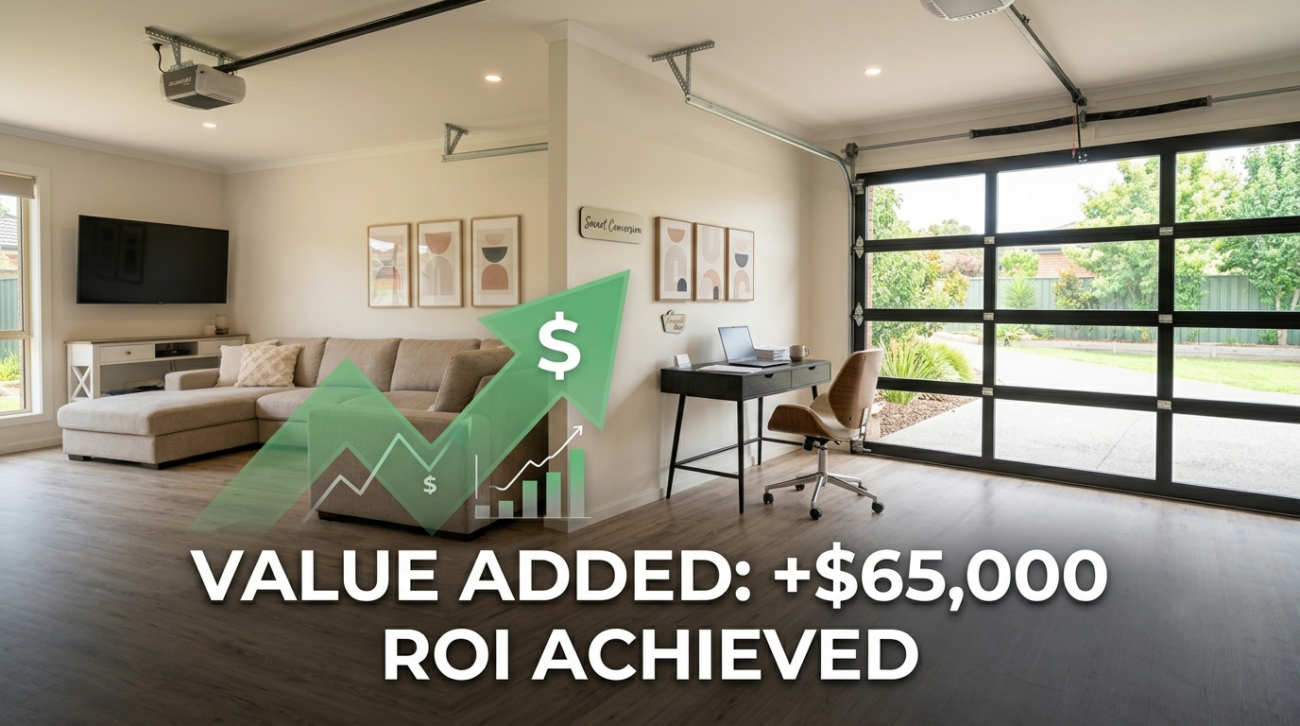
There’s a moment most homeowners eventually reach – you’re standing in the garage, surrounded by bikes you haven’t touched in three years, a treadmill doubling as a coat rack, and enough cardboard boxes to open a moving company. And you think: this space could be so much more.
Converting a garage into a living space is one of the smartest moves you can make as a homeowner. You’re not building from scratch. The foundation is there. The walls exist. You’re just finishing what the original builders left incomplete – and the return on investment can be remarkable.
But before you grab a sledgehammer and start dreaming about a guest suite, you need to understand what this project actually costs, what drives those costs up or down, and how to make decisions that won’t haunt you for years.
What Does a Garage Conversion Actually Cost in 2026?
Let’s start with the number everyone wants: the average cost of a garage conversion in 2026 runs between $10,000 and $50,000, or roughly $50 to $150 per square foot depending on what you’re building and where you live.
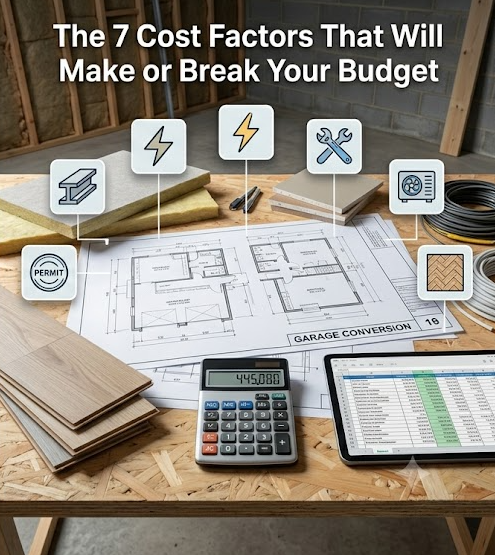
That’s a wide range, and for good reason. Converting a garage into a simple home office looks nothing like converting it into a full accessory dwelling unit (ADU) with a kitchen and bathroom. Here’s a realistic breakdown by project type:
| Conversion Type | Estimated Cost Range |
|---|---|
| Basic living room / flex space | $6,000 – $12,000 |
| Home office | $8,000 – $15,000 |
| Bedroom (no bath) | $10,000 – $17,000 |
| Bedroom + attached bathroom | $18,000 – $30,000 |
| In-law suite / studio apartment | $25,000 – $60,000 |
| Full ADU with kitchen + bath | $40,000 – $100,000+ |
- Source: HomeAdvisor, Angi, HomeGuide – 2026 national averages
The most common project – a single-car garage turned into a functional living area – lands around $16,000 to $20,000 nationally. A two-car garage conversion typically runs $22,000 to $35,000 for a mid-range finish.
The 7 Cost Factors That Will Make or Break Your Budget
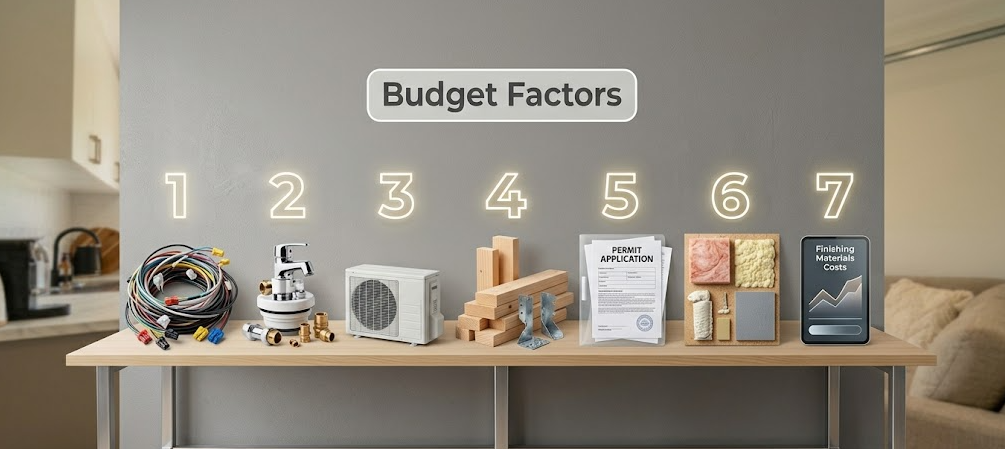
1. Insulation
Garages are built to house cars, not people. That means zero insulation in most cases. You’ll need to insulate walls, ceiling, and – if you have a concrete slab floor – address thermal bridging there too.
Budget roughly $1,500 to $4,000 for insulation depending on garage size and the materials you choose. Spray foam costs more upfront but performs better in humid or extreme climates. Fiberglass batts are the budget option and work fine in moderate climates.
2. HVAC Extension
Your home’s heating and cooling system was never designed to reach the garage. Extending ductwork is possible but can be expensive. A simpler and increasingly popular approach is a mini-split system – a ductless unit that heats and cools independently.
Expect to spend $1,500 to $5,000 for a single mini-split installed.
3. Electrical Upgrades
A garage typically has a circuit or two for lights and the garage door opener. A livable space needs dedicated outlets, lighting circuits, and potentially a subpanel. Plan for $1,000 to $4,000 in electrical work – more if you’re adding appliances, a home office setup, or in-floor heating.
4. Plumbing (The Big Wild Card)
If you’re stopping at a bedroom or home office, you can skip this. The moment you add a bathroom or kitchenette, plumbing becomes the most expensive single line item.
Running new supply and drain lines from the main house to the garage can cost $3,000 to $12,000 depending on the distance and difficulty of routing.
5. Flooring
Concrete slab floors must be addressed before you lay any finished flooring. You’ll likely need to apply a vapor barrier, possibly self-leveling compound, and then your flooring of choice.
Luxury vinyl plank (LVP) has become the go-to for garage conversions – it handles moisture well, looks great, and costs $3 to $7 per square foot installed.
6. Windows and Egress
Most building codes require at least one egress window in any sleeping area. Even if you’re not adding a bedroom, natural light dramatically improves how livable the space feels.
Budget $300 to $900 per window installed, and check with your local building department about egress requirements before finalizing your plans.
7. The Garage Door Opening
Here’s where many homeowners make a costly mistake: they assume they need to immediately frame in and close up the old garage door opening with a wall.
That decision runs $1,500 to $4,000. If budget is tight, consider keeping the door and insulating it heavily – some homeowners do this and it works fine as a temporary measure.
Permits: The Part Nobody Wants to Talk About
Yes, you need permits. Any structural change to your home – including a garage conversion – requires permits in virtually every municipality in the United States.
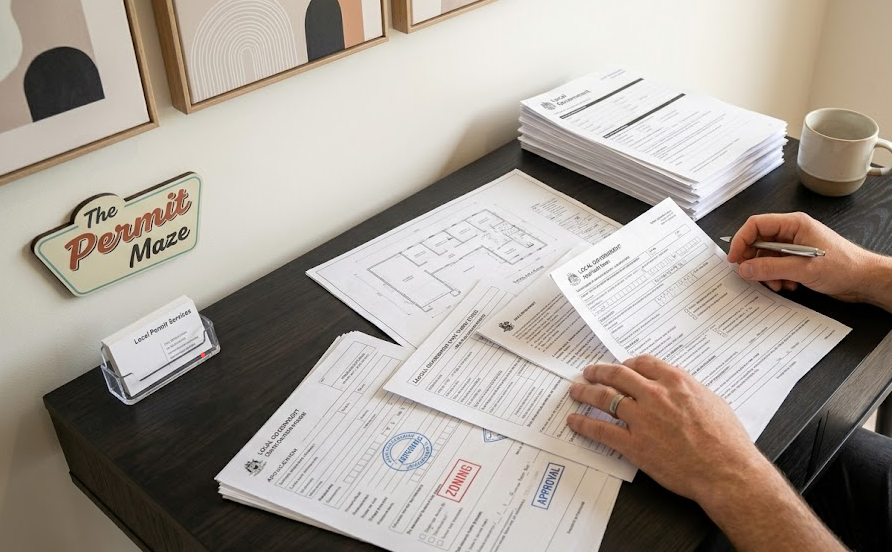
Skipping permits is one of the most expensive mistakes a homeowner can make.
Why? Because when you go to sell, the unpermitted conversion gets flagged in the inspection. You’ll either have to disclose it (and eat a price reduction) or pay to bring it up to code retroactively, which often costs more than doing it right the first time.
Permit costs typically run $400 to $2,000 depending on your city and the scope of the project. Your contractor should handle this, but always confirm it’s included in their quote.
ROI: Does a Garage Conversion Add Value to Your Home?
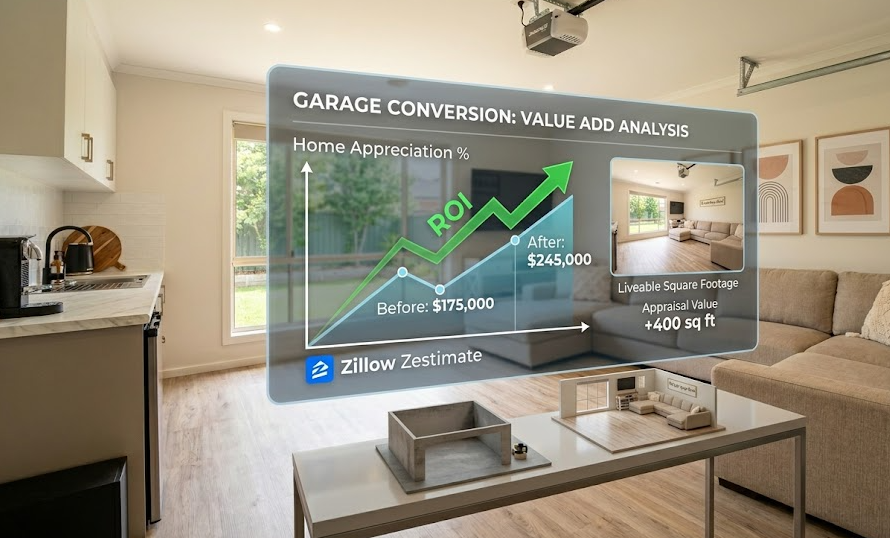
Generally, yes – though the numbers depend on your local market and how the space is used.
- A well-done garage conversion adds roughly $0.60 to $0.80 of value per $1 spent, according to remodeling industry data.
- Converting to a legal ADU or in-law suite adds the most value in high-cost housing markets.
- Adding a bedroom is typically the highest-value conversion in most markets – an extra bedroom can increase your home’s appraisal value significantly, especially if your neighborhood comparable homes tend to have more bedrooms.
The one scenario that can hurt value: converting a garage in a neighborhood where buyers expect parking. If your area has limited street parking, losing the garage may turn off buyers. Know your local market.
How to Save Money Without Cutting Corners
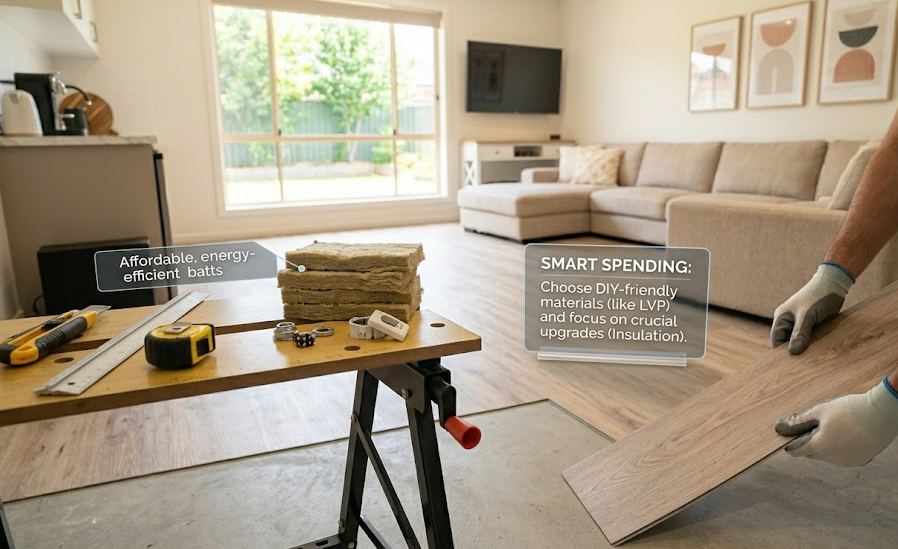
Do your own demo work. Hauling out old drywall, cleaning out insulation, and demolishing non-structural elements is labor you can do yourself. Demo labor runs $25 to $50 per hour – a few weekends of your own time can save $500 to $1,500.
Get at least three quotes. The spread between the highest and lowest contractor bid on a garage conversion is often 30% to 40%. Get multiple quotes and understand what each includes.
Choose LVP over hardwood. In a space that was previously a garage, moisture management is everything. Luxury vinyl plank handles it better than real wood and costs a fraction of the price.
Skip the full bathroom if you can. Going from no plumbing to a full bathroom is the single biggest cost escalator in any garage conversion. A powder room (toilet + sink only, no shower) cuts the plumbing cost roughly in half.
Use a mini-split instead of extending ducts. Ductwork extension is invasive and expensive. A quality mini-split installed by an HVAC contractor handles a 400-600 sq ft space efficiently and gives you independent climate control.
A Quick Word About ADUs
Accessory Dwelling Units (ADUs) – self-contained living spaces with their own entrance – have become enormously popular, partly because many states have relaxed zoning laws to encourage them. A garage-to-ADU conversion allows you to legally rent the space, which can generate $800 to $2,500+ per month in rental income depending on your market.
If you’re considering this path, consult with a local permit specialist early. ADU requirements vary significantly by city and state. California, Oregon, and Washington have particularly ADU-friendly legislation right now that may reduce your permitting burden.
Bottom Line
A garage conversion is one of the best values in home improvement – but only if you go in with accurate expectations and a clear plan. The key decisions that will define your budget are:
- Will you add plumbing? (The biggest cost jump)
- Will you close up the garage door opening? (Major structural cost)
- Do you need a separate entrance? (Essential for ADUs, optional otherwise)
- What’s the finish level? (Basic vs. premium materials can double the cost)
Get those four questions answered before you talk to a single contractor, and you’ll walk into every conversation knowing exactly what you’re buying.
