
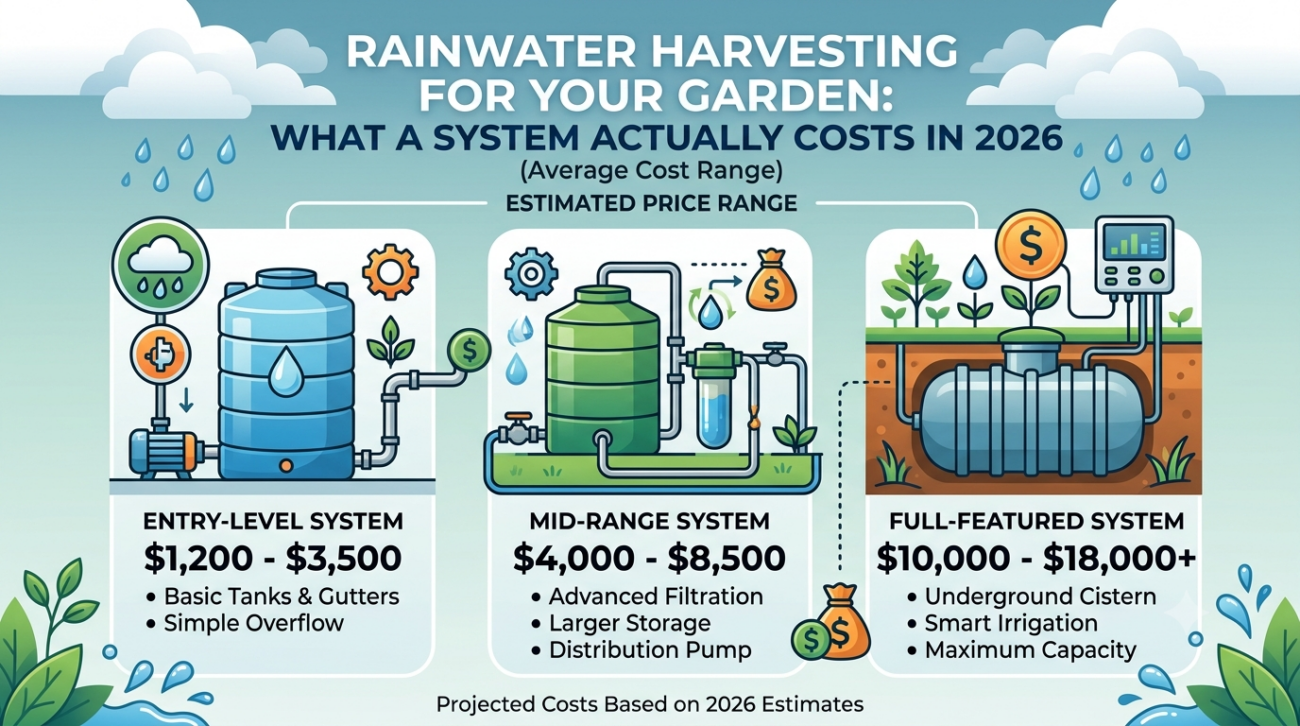
Every time it rains, a meaningful amount of free, untreated water rolls straight off your roof, down the gutter, and into a storm drain while your garden, a few feet away, dries out between waterings all summer. Rainwater harvesting closes that gap, and the entry point is considerably cheaper than most homeowners assume: this isn’t an all-or-nothing decision between doing nothing and installing a $20,000 underground cistern.
Here’s a realistic breakdown of what each tier of system costs, how much water you can actually expect to collect, and which option fits a typical home garden versus a more serious water-independence goal.
Rainwater Harvesting: The Full Breakdown
The Three Tiers of Rainwater Harvesting
| System Type | Storage Capacity | Installed Cost | Best For |
| Rain barrel | 50 – 100 gallons | $120 – $300 | Garden beds, container plants |
| Above-ground cistern | 300 – 10,000 gallons | $1,000 – $12,000 | Lawn irrigation, drought backup |
| Underground cistern | 1,000 – 20,000+ gallons | $6,500 – $24,000+ | Whole-property irrigation, off-grid use |
According to HomeGuide’s 2026 cost data, a basic rain barrel system runs $200 to $2,500 installed for a 50 to 200-gallon setup, while a full cistern system spans $2,000 to $12,000 above-ground or $6,500 to $24,000 underground depending on size and complexity.
How Much Water Can You Actually Collect?
This is the number that makes the case for rainwater harvesting concrete rather than abstract. Per a 2026 sizing guide from Rainplan, the formula is straightforward: multiply your roof’s square footage by annual rainfall in inches by 0.623 to estimate potential gallons collected per year.
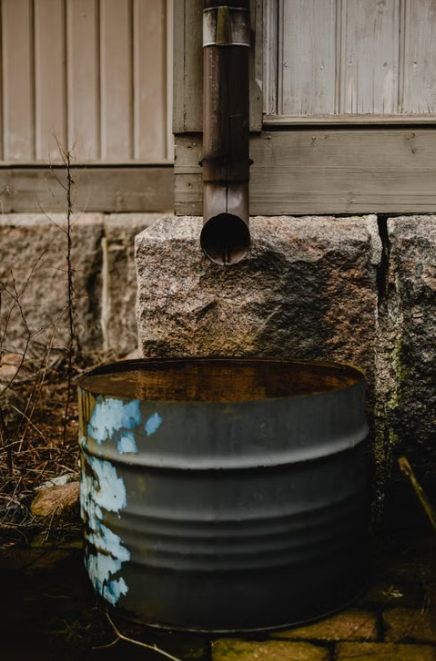
A practical example from that same analysis: a 1,000 square foot roof receiving 30 inches of annual rainfall could theoretically collect around 18,700 gallons a year, and even accounting for evaporation and first-flush losses (water diverted away from the first dirty flush off the roof), a realistic capture rate around 75% efficiency still yields roughly 14,000 gallons annually far more than a single rain barrel can hold, which is exactly why serious gardeners often expand to multiple barrels or a small cistern.
Starting Small: The Rain Barrel Entry Point
For most home gardeners, a single rain barrel connected to an existing downspout is the entire system needed. According to Angi’s 2026 pricing breakdown, most homeowners spend around $140 for a standard 40 to 60-gallon barrel.
With no installation cost beyond positioning it under an existing downspout, making this one of the few home improvement projects with genuinely no learning curve and almost no upfront investment.
What a Basic Rain Barrel Setup Needs
- The barrel itself: $80 – $200 for a 50–100 gallon plastic drum
- A downspout diverter kit: $20 – $50, redirects flow from the gutter into the barrel
- A spigot or hose bib: Usually included in ready-to-use kits
- A mesh screen: Prevents debris and mosquito entry, typically included or under $15
Per Lawn Love’s 2026 guide, going with a full DIY kit and a repurposed plastic drum offers the most savings of any approach, and most flat-back barrel kits are designed to be nearly fully assembled out of the box.
Scaling Up: Cisterns for Serious Garden or Lawn Use
A single rain barrel is genuinely sufficient for container gardens and small raised beds, but maintaining a lawn or larger garden through a dry spell requires meaningfully more storage, typically in the range of 1,000+ gallons of cistern capacity, according to Rainplan’s usage analysis.
| Tank Material | Cost Range | Notes |
| Polyethylene (plastic) | $2,000 – $4,000 (5,000 gal) | Most affordable, widely available |
| Fiberglass | $2,000 – $5,000 | Lightweight, durable |
| Galvanized steel | $3,000 – $6,000 | Strong, longer lifespan |
| Concrete (underground) | $5 – $10 per sq ft poured | Most durable, highest install cost |
According to Fixr’s national cost analysis, a typical dry system with a 5,000-gallon polyethylene tank installed runs around $2,500. While a more elaborate setup with a 5,000-gallon steel tank, a wet system, excavation, and a connected sprinkler system can reach $15,000.
Dry System vs. Wet System: A Distinction Worth Understanding
A dry system is the simpler, cheaper approach: water flows directly from the gutter downspout into a storage tank positioned close to the house, with the pipe remaining empty between rainfalls.
A wet system uses underground piping that stays full of water between rain events, connecting multiple downspouts to a tank that may be positioned farther from the house useful for larger properties but significantly more expensive due to excavation and underground plumbing, per Fixr’s breakdown.
Don’t Skip the Legal Check
This is the step most homeowners overlook entirely, and it genuinely matters: rainwater is treated as a regulated resource in some states. According to Angi, only 27 of the 50 U.S. states actively encourage and reward rainwater harvesting through incentives, while others place restrictions on how much can legally be collected.
Hawaii, for example, caps collection at 360 gallons without a permit in some jurisdictions. The U.S. Department of Energy maintains a Rainwater Harvesting Regulations map that’s worth checking before investing in anything beyond a basic single rain barrel.
Rebates Can Cut Costs Substantially
Many municipalities and water districts actively subsidize rain barrels and small cistern systems as part of stormwater management initiatives.
According to Pro Landscape’s 2025 regional analysis, programs like Montgomery County, Maryland’s RainScapes initiative offer rebates of up to $750 toward qualifying installations, and similar programs exist in numerous cities and counties nationwide. Before purchasing anything, it’s worth a quick search for your specific city or county’s stormwater or water conservation rebate program.
In many cases, this can cut the out-of-pocket cost of a rain barrel system by 50% or more.
Maintenance: What Ongoing Costs Actually Look Like
| System Type | Annual Maintenance Cost | What’s Involved |
| Rain barrel | $0 – $50 | Periodic cleaning, screen checks |
| Cistern with filtration | $200 – $740 | Filter changes, gutter cleaning, pump checks |
| Underground system | $300 – $800+ | Pump maintenance, periodic tank inspection |
One maintenance detail matters regardless of system size: standing rainwater can become contaminated within about a week and attract mosquitoes. To prevent problems, fit every barrel or tank with a tight-fitting lid and fine mesh screens over all openings, and use or empty the stored water every 10 days during mosquito season.
Bottom Line
For most home gardeners, the best place to start is a single $140 rain barrel connected to an existing downspout. In most areas, you won’t need a permit, and the barrel quickly pays for itself by reducing watering costs. It also shows you how much water your roof can collect before you decide whether to expand the system.
Cisterns make sense once you’re seriously trying to sustain a lawn through drought conditions or move toward broader water independence, but they’re a meaningfully bigger investment that’s worth approaching only after the rain barrel experience confirms it’s worth the upgrade.
