
Every apartment dweller eventually meets the same nemesis: the upstairs neighbor’s late-night footsteps, the couple next door who argue (or worse, don’t), the hallway chatter that bleeds through a door that was never designed to block much of anything. Renting limits your options, but it doesn’t eliminate them. There’s a genuinely useful category of damage-free soundproofing that works within a lease’s restrictions, and it’s worth understanding before you assume your only option is to suffer through it.
Step One: Figure Out What Kind of Noise You’re Actually Fighting
This single step changes everything about which fix actually works. Sound problems generally fall into two categories, and treating the wrong one wastes money.
| Noise Type | Examples | Best Fixes |
| Airborne noise | Voices, TV, traffic, music | Sealing gaps, heavy curtains, door sweeps, mass-loaded vinyl |
| Impact noise | Footsteps, dropped objects, furniture moving | Rugs, floor padding, underlayment |
Before buying anything, walk your space and identify the specific source: is it coming through the shared wall, under the door, through the window, or down through the ceiling? Most apartments have one dominant noise pathway, not five equal ones; find it first.
Damage-Free Fixes Ranked by Effectiveness
1. Bookshelves and Dense Furniture Against Shared Walls
This is the cheapest fix available, and it genuinely works because of a basic acoustic principle: mass and density block sound. A tall bookshelf positioned against a problem wall, then fully stocked with books and dense items, creates a real barrier. According to a 2025 guide from Apartment List, a fully stocked bookshelf works especially well precisely because the combined mass and density of books creates an effective sound barrier.
- Cost: $0 if you already own furniture; $50–$200 for a new bookshelf
- Time: 30 minutes to rearrange
2. Acoustic Wood Panels
Acoustic panels mounted with adhesive strips (not screws) absorb sound waves and reduce echo, all while adding genuine visual interest to a wall. They’re one of the more attractive options on this list, doubling as decor rather than looking like a workaround.
- Cost: $30–$120 for a set covering one accent wall
- Installation: Adhesive mounting strips are fully reversible, no holes
3. Mass Loaded Vinyl (MLV)
MLV is the material professional studios use, and it’s become widely available for DIY apartment use. It’s dense, flexible, and can be hung temporarily behind furniture or framed art rather than fixed directly to drywall. A 2026 comparison from Soundproof Geek identifies MLV as the single best option for soundproofing existing walls without removing drywall, citing its strong price-to-performance ratio for both airborne and impact noise.
- Cost: $1.50–$3 per square foot
- Renter-friendly approach: hang it inside a fabric wall tapestry or behind a large frame rather than directly affixing it
4. Soundproof Curtains and Blankets
Heavy, densely woven curtains hung over windows or even draped along a problem wall block a meaningful amount of incoming noise, particularly traffic and street-level sound. They’re also fully reversible: take them down, and no trace is left behind.
- Cost: $30–$90 per panel
- Best for: windows facing busy streets, shared walls where furniture placement isn’t an option
5. Door Sweeps and Weatherstripping
Hallway noise and chatter from common areas typically enters through the gap under and around an apartment’s front door. A door sweep (a strip that seals the bottom gap) plus adhesive foam weatherstripping around the frame closes this pathway almost entirely.
- Cost: $15–$40 total
- Installation time: Under 20 minutes, fully removable
6. Acoustic Caulk for Outlets and Baseboard Gaps
Small gaps around electrical outlets and baseboards let noise pass through far more easily than people expect. A 2024 guide from Wood Panel Walls specifically recommends acoustic caulk to fill these gaps as one of the cheapest soundproofing fixes available, since it directly addresses sound leaks that no amount of furniture or curtains can fully block.
- Cost: $8–$15 per tube
- Note: Use a removable, paintable acoustic sealant rather than permanent construction caulk if you want a damage-free option
7. Rugs and Floor Padding for Impact Noise
If your noise problem is footsteps and dropped objects from above (or you’re trying to be a considerate neighbor to whoever lives below you), a thick rug with a dense rubber pad underneath absorbs impact noise dramatically better than bare flooring or a thin decorative rug.
- Cost: $60–$300 depending on rug size and pad quality
- Best for: hardwood or laminate floors in apartments without carpet
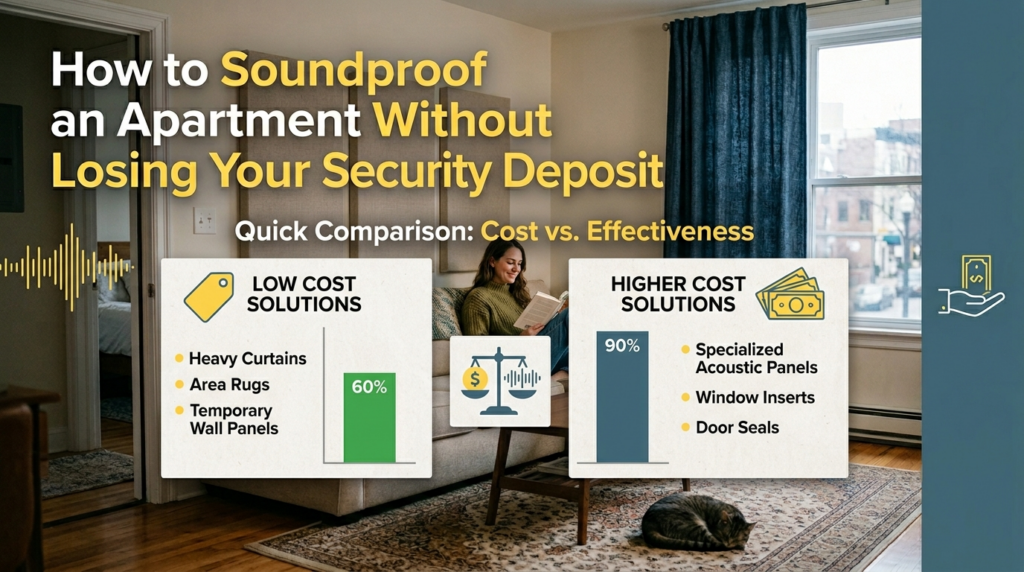
Quick Comparison: Cost vs. Effectiveness
| Method | Cost | Effectiveness | Renter-Safe |
| Bookshelf + dense furniture | $0–$200 | Moderate | Yes |
| Acoustic wood panels | $30–$120 | Moderate–High | Yes |
| Mass loaded vinyl (hung) | $50–$150 | High | Yes, if not affixed directly |
| Soundproof curtains | $30–$90/panel | Moderate | Yes |
| Door sweep + weatherstripping | $15–$40 | High (for hallway noise) | Yes |
| Acoustic caulk on gaps | $8–$15 | Moderate | Mostly use removable sealant |
| Rug + dense pad | $60–$300 | High (impact noise) | Yes |
What to Skip If You’re Renting
Drilling into walls for heavier-mounted panels, adding a second layer of drywall, or using permanent construction adhesive directly on painted walls are all effective in owned homes but risk your security deposit in a rental.
Stick to adhesive strips, freestanding furniture, and pressure-mounted or hung solutions; every fix on the list above can be fully removed at move-out without a trace.
The Honest Limitation
None of these fixes will achieve studio-level sound isolation, and that’s an important expectation to set going in.
A 2025 guide from Home Sidekick puts it plainly: complete sound isolation is difficult and expensive to achieve in any setting, and especially so in a rental where structural changes aren’t an option. What these methods do reliably deliver is a meaningful, noticeable reduction often enough to turn an unbearable noise problem into a tolerable background hum.
Bottom Line
Start with the cheapest, most reversible fixes first: rearrange furniture, seal the door, hang heavier curtains. If the noise problem is severe enough to need more, layer in MLV and acoustic panels before considering anything that requires drilling or permanent adhesive.
Combining three or four of these methods together produces a noticeably bigger improvement than relying on any single fix alone.
